The Best Guide to Choosing a Logistics Solution
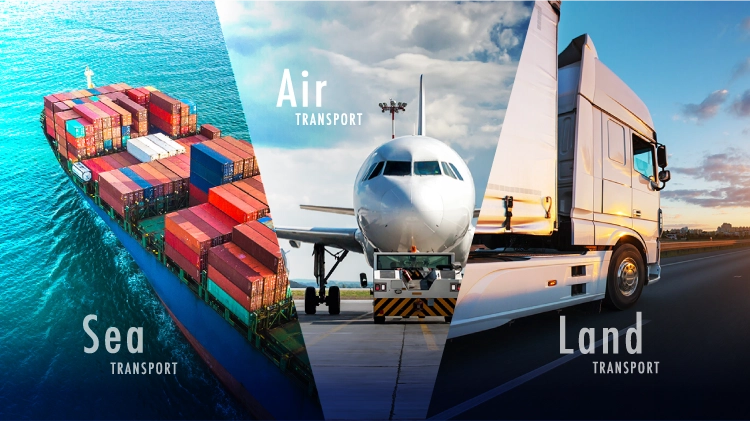
A lot can depend on the type of transport used in logistics
In fact, the three modes of movement—air, sea, and road services—exist separately, and each type of transport has different advantages and disadvantages, so the right choice may depend on factors such as speed, cost, distance, cargo type, and environmental impact. We will explore these options and help determine how you can achieve your ideal logistics solution.
Air Freight: Speed and Reliability for Urgent Shipments
The fastest mode of transport is air freight. Express shipments are usually preferred to be sent by air. High-value goods such as pharmaceuticals, electronics, and perishable products make up the majority of shipments, and transit time is reduced.
Advantages of Air Freight
Speed: Delivery times are reduced from weeks to days with air freight.
Reliability: Scheduled flights operate on time, and even tracking the shipment provides transparency.
Limited Handling: The likelihood of cargo damage is lower, as handling is more limited compared to road and sea transport.
Global Coverage: Air freight allows wide geographical reach, even to remote locations.
Disadvantages of Air Freight
High Cost: Air freight is much more expensive compared to sea or land transport and is not preferred for low-margin goods.
Size and Weight Limitations: Restrictions in air freight mean that large or heavy goods may not be transportable.
Environmental Concerns: Compared to the other two options, air freight has the largest carbon footprint, which can hinder many sustainability programs.
Sea Freight: Cost Efficiency for Bulk Shipments
The cheapest form of transporting large quantities of cargo over long distances is sea freight. Non-perishable goods and especially heavy cargo such as machinery, textiles, and construction materials are the most commonly transported goods by sea. Compared to air freight, sea freight is slower; however, it is very efficient for cargo that does not have tight delivery deadlines.
Advantages of Sea Freight
Most cost-efficient per kilogram: Bulk or heavy cargo is ideally transported via sea freight.
Highest capacity: Large goods can be transported in significant volumes on ships with lower delivery costs and greater economies of scale.
Lower carbon emissions: Sea freight is more environmentally friendly than air transport, as many shipping lines adopt green logistics practices.
Flexible container options: Various types and sizes of containers are available.
Disadvantages of Sea Freight
Lower cost: Compared to air or land delivery, sea freight is cheaper and widely used for goods without time constraints.
Availability: Poor weather conditions, especially on transoceanic routes, may prevent cargo from arriving on time.
Customs delays: Congestion and delays may occur at some ports due to customs procedures, disrupting schedules.
Transport risks: Cargo is exposed during transit and may be damaged if not properly handled.
Road Freight: Flexibility for Regional Deliveries
Well-developed road networks are usually best suited for short and medium distances and are especially flexible for regional transport. Trucks are typically used as the final delivery stage in last-mile logistics and, due to extensive road networks, they are the most effective link in multimodal transport.
Advantages of Road Freight
Cost Efficiency for Short Distances: Road freight is usually cheaper than air or sea freight for short routes.
Door-to-Door Service: Road transport delivers goods directly from source to destination, minimizing handling and potential delays.
Flexibility: Trucks can operate on flexible schedules, allowing road transport to adapt to different delivery needs.
Wide Coverage: Road transport can reach areas inaccessible by air or sea, especially in remote and rural locations.
Disadvantages of Road Freight
Transporting goods over long distances or internationally by road may not be as efficient as air or sea transport.
Poor weather conditions and traffic congestion can cause delays. Truck capacity is limited, making it impractical for very large shipments.
Environmental impact is higher, as greenhouse gas emissions are greater than sea transport, though lower than air transport.
Choosing the Right Logistics Solution
There are many factors to consider when choosing between air, sea, and road freight. Some key considerations include:
Delivery Speed: If speed is your primary requirement, choose air freight. For flexible timelines, sea or road options are more economical.
Budget: Sea freight is the cheapest per unit of cargo, followed by road freight, while air freight is the most expensive.
Cargo Type: Some types of cargo require faster and more reliable air transport, while bulk goods are efficiently transported by sea or road.
Distance and Location: Air and sea transport are more efficient for international shipments, while road freight is essential for regional or last-mile delivery.
Sustainability Goals: If your organization prioritizes environmental concerns, sea freight has the lowest emissions, followed by road, while air transport is the least environmentally friendly option.
Conclusion
Therefore, choosing the right logistics solution is crucial for an efficient supply chain. Each mode of transport has its own advantages and trade-offs; the best choice depends on business needs. By considering the benefits and drawbacks of each, it is possible to make the best decision in terms of speed, cost, and environmental impact.
Quick price query!
Fill out the form to get a special price offer for the services.